
3 High Magnitude Earthquakes Strike Venezuela and Northern Japan
U.S. Geological Survey, June 25: “High casualties and extensive damage are probable and the disaster is likely widespread.”
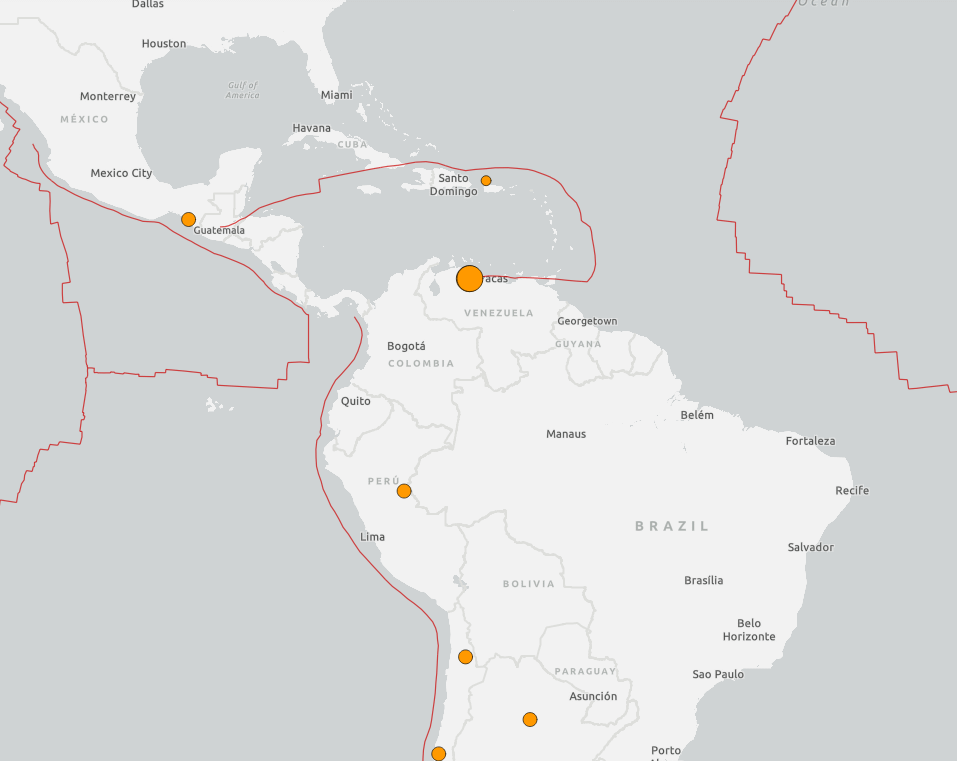
AMERICAS AND ASIA-PACIFIC — Twin earthquakes of magnitude 7.5 and 7.2 struck western Venezuela early on June 25, causing building collapses in Caracas and other areas and prompting authorities to announce a state of emergency.
A magnitude 6.9 earthquake occurred off the northern coast of Japan at approximately the same time, producing strong shaking but no reported damage or injuries.
Venezuela Earthquakes
Two earthquakes occurred in quick succession near San Felipe in Yaracuy state. The first registered magnitude 7.2, followed approximately one minute later by the magnitude 7.5 mainshock (the largest of the earthquakes that occurred).
Both events were shallow and centered within roughly 16 to 19 miles (25 to 30 km), according to the U.S. Geological Survey.
Shaking reached high intensity in parts of Venezuela and was felt across Colombia, the Caribbean Netherlands, Curaçao, and Aruba.
Multiple buildings collapsed in Caracas and surrounding municipalities. Rescue teams searched rubble for trapped people.
Venezuelan authorities, including Acting President Delcy Rodríguez, announced a state of emergency and stated that fatalities had occurred.
The U.S. Geological Survey (USGS) issued a red alert, stating that high casualties and extensive damage were probable and that the disaster was likely widespread.
Probabilistic modeling indicated a significant chance of thousands of fatalities, though official national counts of deaths and injuries remained under verification as rescue operations continued.
Baruta municipal authorities stated at least three deaths in Caracas. In Falcón state, officials said 15 people were searched for in rubble and 35 injured. In Chacao municipality, first responders rescued at least 18 people from damaged buildings.
Interior Minister Diosdado Cabello described serious situations with collapsed homes and buildings in Altamira and called on motorists to yield to emergency vehicles. Authorities recorded at least 20 aftershocks.
Assessment: The near-simultaneous timing and shared location indicate the events occurred on the same fault system, with the smaller shock immediately preceding the mainshock.
Shallow focal depths amplified surface effects in populated areas. The broad geographic extent of felt shaking and the USGS red alert reflect the substantial energy release.
Ongoing aftershocks and challenges in damaged zones continue to complicate damage and casualty assessments.
Local reports of specific deaths and rescues provide early ground-level confirmation while national tallies remain incomplete.
Japan Offshore Earthquake
A magnitude 6.9 earthquake struck approximately 19 miles (30 km) east-northeast of Kuji, Iwate Prefecture, off the northern coast of Japan, according to the U.S. Geological Survey.
Strong shaking was recorded, reaching upper levels on the Japanese intensity scale in parts of Aomori Prefecture and felt as far as Tokyo. No tsunami warning was issued.
No injuries or collapsed buildings were reported.
Prime Minister TAKAICHI stated that at approximately 7:30 a.m. today an earthquake with its epicenter off the coast of Iwate Prefecture occurred, and strong tremors with a maximum seismic intensity of 6 upper were observed in Hashikami Town, Aomori Prefecture. There is no risk of a tsunami.
Immediately after the earthquake, the Government established an information contact office at the Prime Minister’s Office Crisis Management Center and convened an emergency gathering team consisting of director-general-level officials from the relevant ministries and agencies.
The Prime Minister asked those in areas that experienced strong tremors to remain alert for further earthquakes of similar intensity.
The Prime Minister instructed relevant ministries and agencies to assess the state of damage as soon as possible, coordinate closely with local governments, prioritize life-saving and rescue operations, and provide timely and appropriate information to the public on evacuation and the state of damages.
Assessment: Greater focal depth and offshore location limited the potential for severe ground shaking or damage.
Japan’s building standards for earthquakes and public preparedness contributed to the absence of reported harm despite felt intensities across a wide area.
The event aligns with known tectonic patterns in the region but produced no significant disruption.
The government responded with immediate establishment of crisis management structures and public advisories on aftershock vigilance.
Official Statements
U.S. Geological Survey, June 25: “High casualties and extensive damage are probable and the disaster is likely widespread.”
Prime Minister TAKAICHI, June 25: “At approximately 7:30 a.m. today, an earthquake with its epicenter off the coast of Iwate Prefecture occurred, and strong tremors with a maximum seismic intensity of 6 upper were observed in Hashikami Town, Aomori Prefecture. There is no risk of a tsunami. Immediately after the earthquake, the Government established an information contact office at the Prime Minister’s Office Crisis Management Center and convened an emergency gathering team consisting of director-general-level officials from the relevant ministries and agencies. I ask those in areas that experienced strong tremors to remain alert for further earthquakes of similar intensity.”
Intelligence Gaps
Exact national totals for deaths, injuries, and people trapped in Venezuela remain unconfirmed pending completion orescue operations and official validation.
Full assessments of infrastructure damage, power outages, and displacement require additional reporting.
Aftershock patterns for both the Venezuela and Japan events continue to be monitored.
Fact-Check Summary
Magnitudes, locations, and timing align across U.S. Geological Survey records and international monitoring.
Venezuela casualty figures remain preliminary; local officials stated specific deaths and injuries alongside broader probabilistic estimates from USGS modeling.
No contradictions appear in core instrumental data. Japan impact claims of zero casualties and no major damage are consistent with official statements from the Japan Meteorological Agency and Prime Minister’s Office.