MIDDLE EAST — On November 22, U.S. Central Command (CENTCOM) said Adm. Brad Cooper completed a weeklong visit to the Middle East. He discussed the current security environment and opportunities for continued collaboration with senior civilian and military leaders in Israel, Qatar and Saudi Arabia, and met with some of the 50,000 U.S. service members deployed to the region, thanking them for service during combat operations against the Islamic Revolutionary Guard Corps (IRGC).


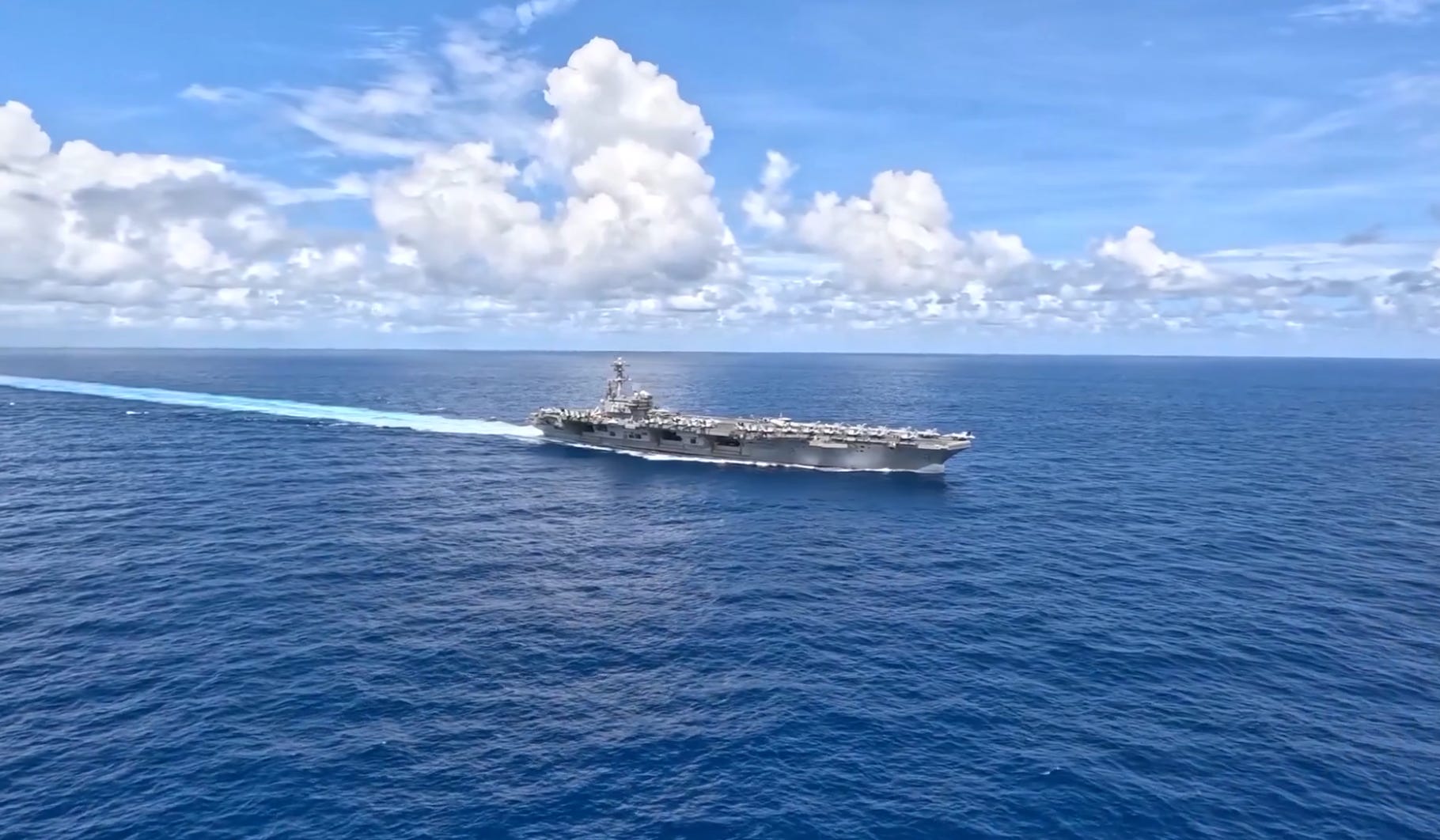
The day before, CENTCOM said the American blockade against Iran had reached 130 consecutive days, with U.S. service members enforcing it and preventing Iran’s Islamic Revolutionary Guard Corps from exporting billions of dollars in crude oil.
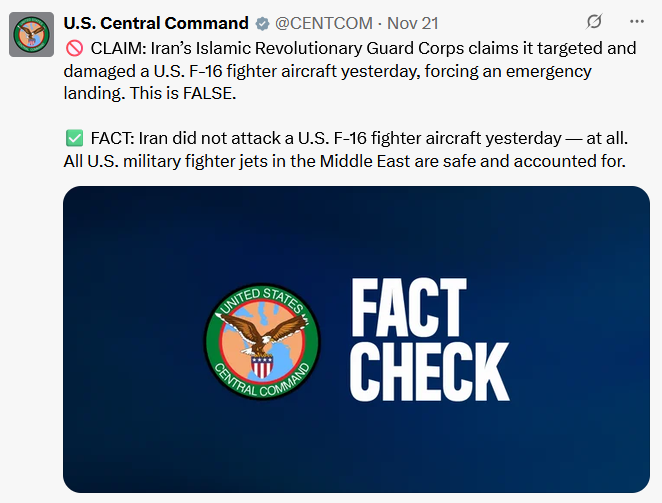
The same day it stated that an Iranian claim of targeting and damaging a U.S. F-16 fighter aircraft the previous day, forcing an emergency landing, was false, adding that Iran did not attack a U.S. F-16 at all and that all U.S. military fighter jets in the Middle East were safe and accounted for.
Independent Automatic Identification System (AIS) tracking services recorded commercial crossings of the Strait of Hormuz at roughly 8 vessels per day in the week ending November 22, about 9 percent of the pre-crisis baseline near 85 per day.
CENTCOM has redirected 147 compliant commercial vessels and disabled five non-compliant ones since the blockade resumed on July 14, according to its November 7 release.
Iranian state-run media reported on November 21 that Tehran considers the U.S. economic blockade an act of war and will take whatever measures are necessary to break it.
