
MIDDLE EAST — On July 27, Iranian Foreign Ministry spokesman Esmail Baghaei said Iran is not engaged in any negotiations with the United States, even as both sides maintained a pause in military exchanges for a second consecutive day.
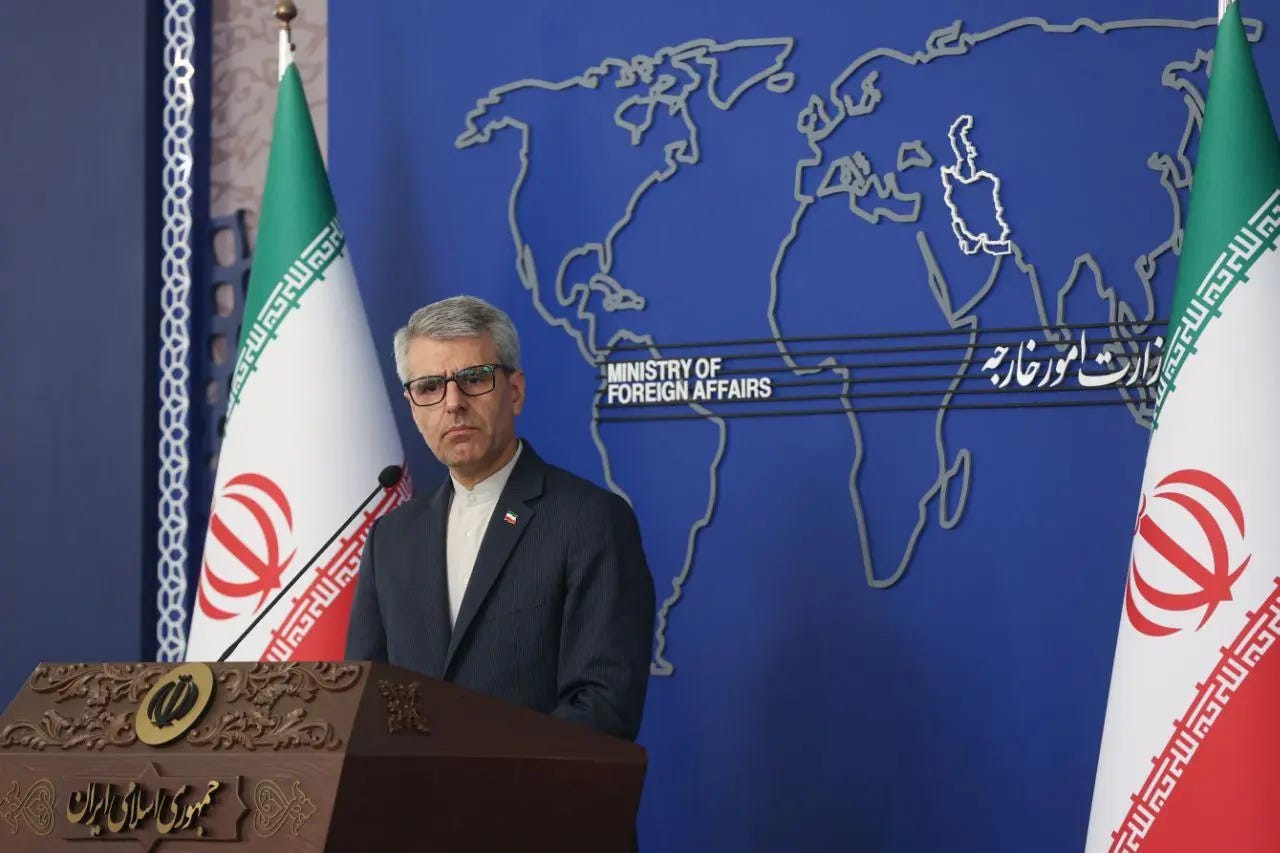


Baghaei noted mediators may convey messages from the American side regarding regional developments, but no negotiations are under way.
Iranian army spokesman Mohammad Akraminia said Iran had halted its retaliatory operations after the United States stopped its attacks. U.S. Ambassador to the United Nations Mike Waltz said President Donald Trump is giving talks “some space” and “a little bit of room.”
Akraminia said Iran’s strategy had been retaliatory and that operations were halted once U.S. strikes stopped. Iran continued to assert control over the Strait of Hormuz and reported ongoing bilateral discussions with Oman on navigation management.
On July 27, Esmail Baghaei addressed a weekly press briefing in Tehran and said claims Iran had requested negotiations with the United States are fabrications circulated by the other side. He added that Iran’s priority remains defending its sovereignty.
Iranian state-affiliated media reported Baghaei’s additional comments that the United States had “betrayed diplomacy” by violating a prior 14-point Islamabad Memorandum of Understanding.
Baghaei further noted that the only ongoing talks are with Oman and are focused on creating the necessary arrangements regarding the Strait of Hormuz. He said Iran will not allow the United States to determine the time of war and peace and will defend itself for as long as necessary.
The United States conducted no airstrikes on Iran for a second straight night after operations that began in early July. Iranian forces likewise conducted no attacks on U.S. bases or regional partners after July 24.
The final night of strikes by the United States, marked as the 13th consecutive night completed on July 23 at 9 p.m. ET, targeted Iranian military command centers, drone storage facilities, communication networks, coastal surveillance sites, and maritime capabilities.
Baghaei said Iran and Oman held discussions on July 24 and 25 on mechanisms for safe navigation through the Strait of Hormuz while respecting the sovereign rights of both coastal states. He said the waterway remains closed under Iran’s management authority.
Iranian state media reported that six vessels attempting unauthorized transit were turned back on July 27. On July 26 Iranian Foreign Ministry Spokesperson Esmail Baghaei said that several rounds of negotiations were held in Tehran on Friday and Saturday between deputy foreign ministers of the two countries.
The two sides exchanged views on shared principles and operational mechanisms for ensuring the safe passage of maritime traffic through the Strait of Hormuz while respecting the sovereign rights of the two littoral states.
The talks were constructive and had yielded progress. The Omani delegation left Tehran on Saturday afternoon, but technical and political consultations between the two sides are continuing.
No changes have occurred in the status of maritime traffic through the Strait. Baghaei clarified that these bilateral talks had no relation to the United States.