
MIDDLE EAST — U.S. President Donald Trump ordered an immediate U.S. Navy blockade of the Strait of Hormuz on April 12 after 21 hours of direct talks with Iran in Islamabad ended without agreement on the nuclear issue.
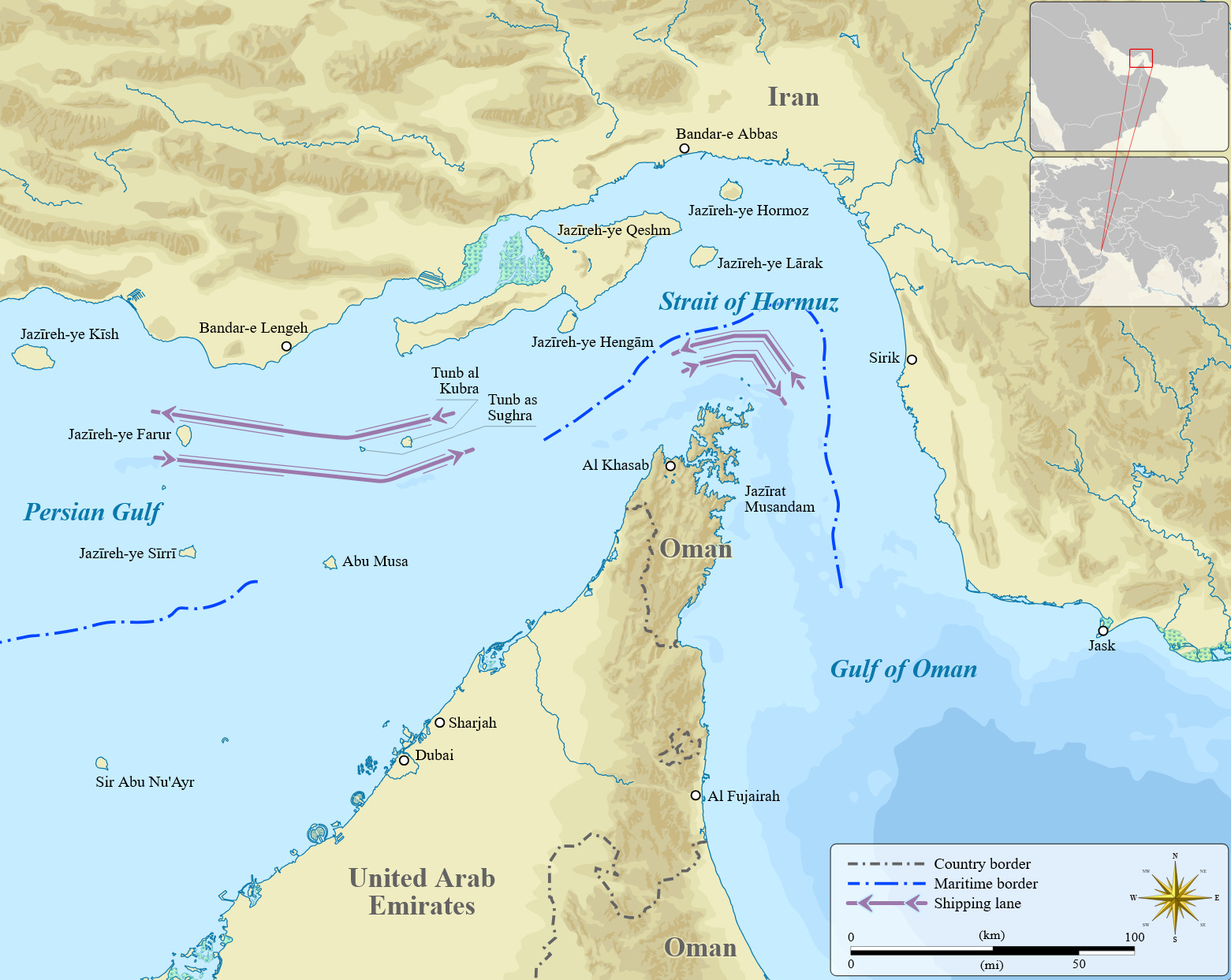


Trump stated, “Effective immediately, the United States Navy, the Finest in the World, will begin the process of BLOCKADING any and all Ships trying to enter, or leave, the Strait of Hormuz.”
Trump directed the Navy to interdict every vessel in international waters that has paid a toll to Iran and to destroy mines laid by Iranian forces.
He said, “Any Iranian who fires at us, or at peaceful vessels, will be BLOWN TO HELL!” Trump added, “the meeting went well, most points were agreed to, but the only point that really mattered, NUCLEAR, was not.”

The first direct high-level in-person engagement between the United States and Iran since the 1979 Islamic Revolution ended without agreement after 21 continuous hours of negotiations at the Islamabad Serena Hotel in Pakistan.
U.S. Vice President JD Vance, who led a U.S. delegation of approximately 300 members, said the American side had presented “a very simple proposal, a method of understanding that is our final and best offer.”
Iran’s delegation of approximately 70 members was led by Parliament Speaker Mohammad Bagher Ghalibaf, not Foreign Minister Abbas Araghchi. Iran’s Foreign Ministry spokesman Esmail Baghaei stated, “the talks did not reach an agreement,” attributing the failure to “unreasonable demands” by the American side.
More than 800 vessels remain trapped in the Persian Gulf with approximately 20,000 civilian seafarers aboard, according to the International Maritime Organization. Iran has been collecting ad-hoc transit tolls of up to $2 million per ship, according to maritime industry source gCaptain.
