Defcon Alerts Threat Monitor

Defcon Alerts Threat Monitor

Space/Nuclear

U.S. Declassifies Seismic Evidence Confirming Lop Nur Nuclear Explosion In 2020

U.S. analysts estimate a yield of approximately 10 tons nuclear (or 5 tons conventional equivalent), assuming the blast was fully contained in solid rock.

Defcon Level's avatar
Donald Standeford's avatar
Defcon Level and Donald Standeford
Feb 27, 2026
∙ Paid

GLOBAL — U.S. officials have publicly detailed intelligence assessing a seismic event near China’s Lop Nur nuclear test site on June 22, 2020, as a low-yield nuclear explosion.
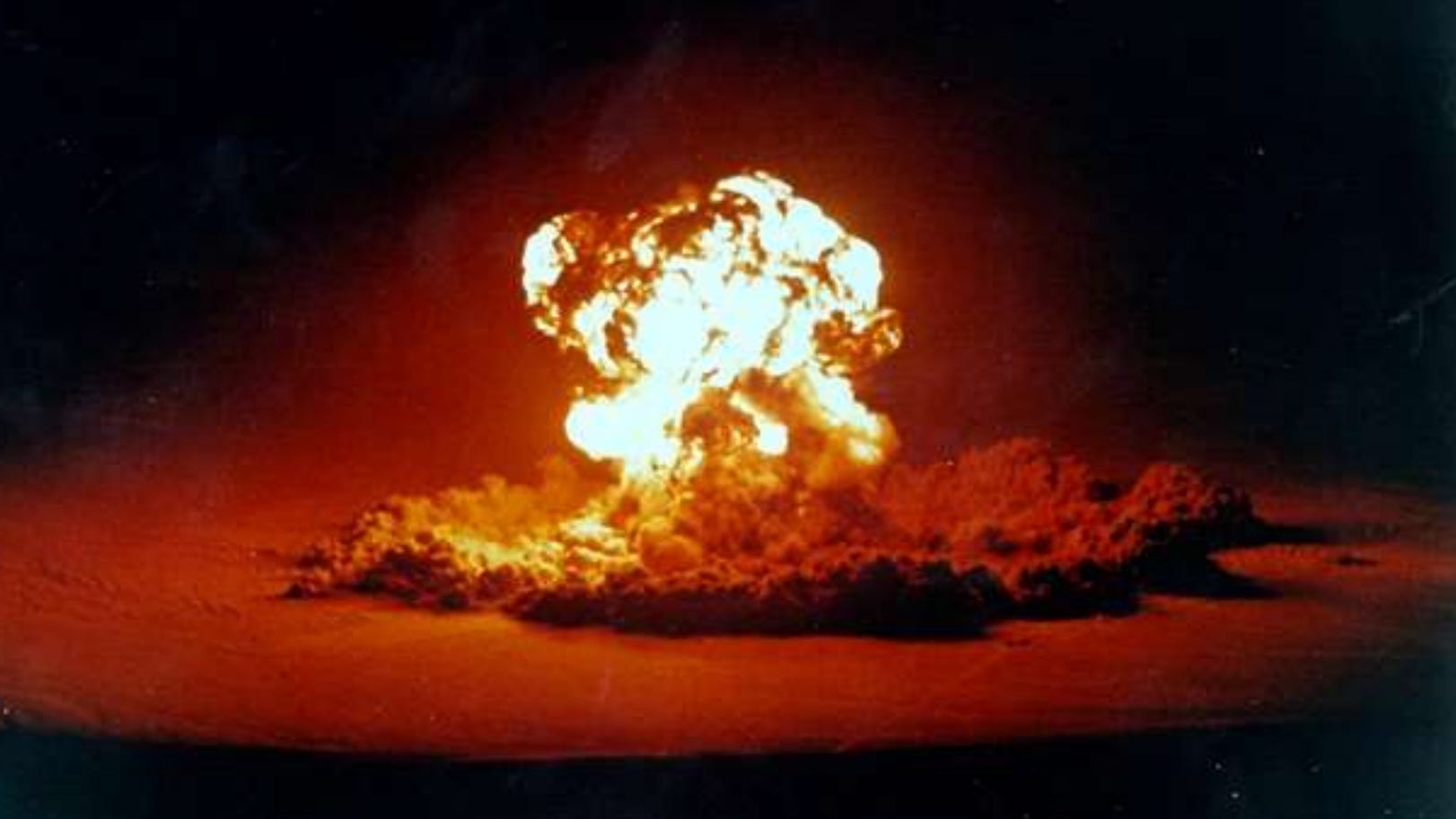
photo for illustration purposes only

Share

Russia Considers Resuming Nuclear Weapons Tests in Response to U.S. Statements On Resumption

Russia Considers Resuming Nuclear Weapons Tests in Response to U.S. Statements On Resumption

Defcon Level and Donald Standeford
·
November 5, 2025
Read full story
U.S. Nuclear Arsenal Claims Amid Global Developments and Projections

U.S. Nuclear Arsenal Claims Amid Global Developments and Projections

Defcon Level and Donald Standeford
·
November 2, 2025
Read full story
US Conducts Ballistic Missile Intercept From Guam For The First Time

US Conducts Ballistic Missile Intercept From Guam For The First Time

Defcon Level
·
December 13, 2024
Read full story

More Alerts On Space/Nuclear

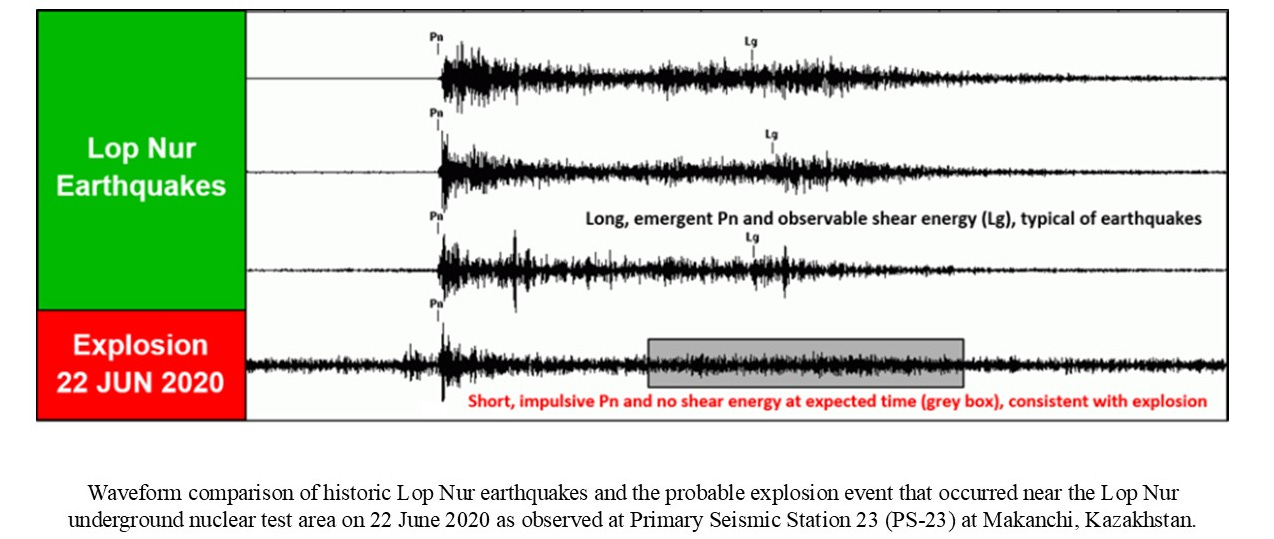
The assessment relies on waveform data from Primary Seismic Station 23 (PS-23) at Makanchi, Kazakhstan, part of the International Monitoring System, a global network of sensors designed to detect nuclear tests.
Refer a friend

A magnitude 2.75 event was recorded at 09:18 Greenwich Mean Time. Seismic signals showed a short, sharp pressure wave (Pn) — the kind produced by a sudden energy release like an explosion — and no side-to-side shaking energy (Lg) that natural earthquakes normally produce at the expected time.

Historical Lop Nur earthquakes exhibit long, emergent Pn waves and clear Lg shear phases. The 2020 event’s waveform matched explosion signatures in official U.S. comparisons.

U.S. analysts estimate a yield of approximately 10 tons nuclear (or 5 tons conventional equivalent), assuming the blast was fully contained in solid rock — meaning all energy transferred into the ground rather than being absorbed by softer material.
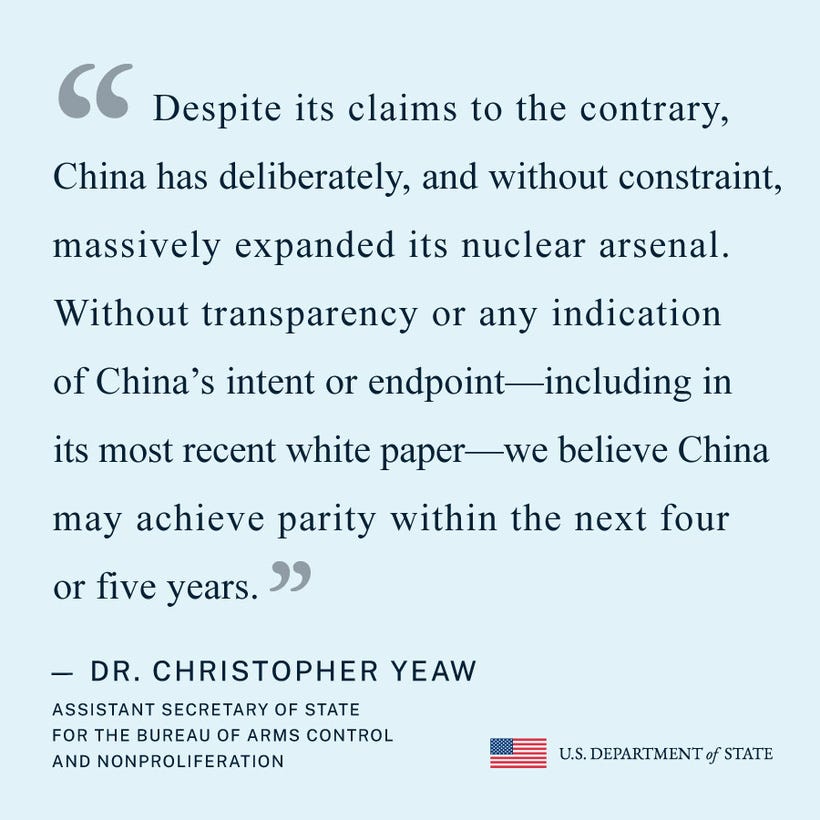
If the test was conducted in a way that dampened the seismic signal (decoupling), the actual yield would be higher than the estimate.

Seismic Waveform Comparison

Defcon Alerts Threat Monitor is a reader-supported publication. To receive new posts and support my work, consider becoming a free or paid subscriber.

This post is for subscribers in the Alerts & Reports: Custom plan

Already in the Alerts & Reports: Custom plan? Sign in
Donald Standeford's avatar
A guest post by
Donald Standeford
Founder of The Standeford Journal. I'm an American independent investigative journalist, intel/geopolitical analyst, and world traveler.
Subscribe to Donald
© 2026 Defcon Level · Privacy ∙ Terms ∙ Collection notice
Start your SubstackGet the app
Substack is the home for great culture