JORDAN — On July 24, the U.S. Embassy in Amman issued a security alert stating that heightened tensions in the Middle East leave the security environment complex with potential for unforeseen escalation, advising Americans in the region to prepare for flight cancellations, periodic airspace closures, and travel disruptions while those outside should reconsider travel to and through the region.
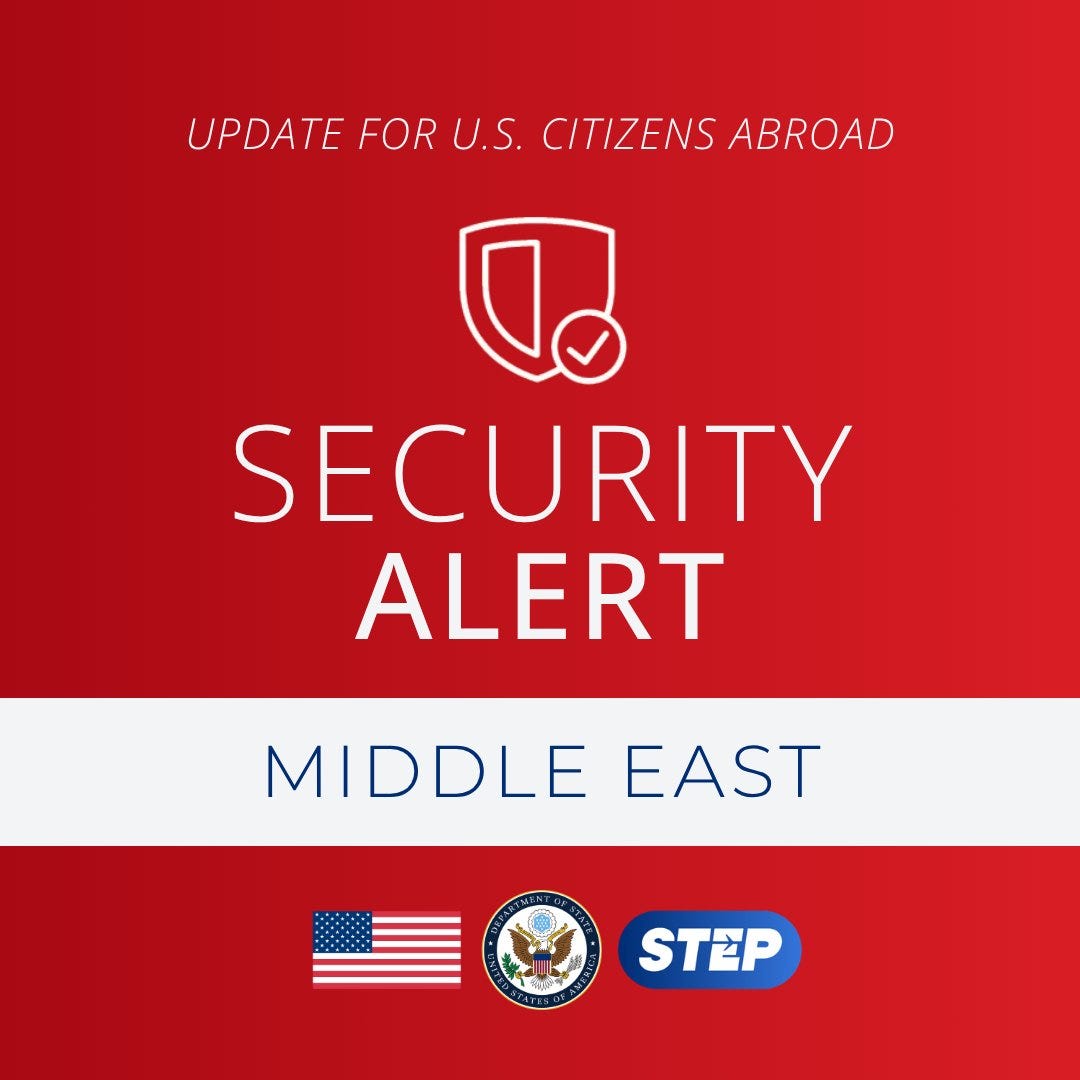


The alert notes that some airlines have postponed resumption of earlier schedules or cancelled routes, directs travelers to check Amman Queen Alia International Airport status at qaiairport.com, and states that Iran and groups supportive of Iran may target U.S. interests including businesses and institutions.
It advises Americans to avoid military bases in Jordan and recalls that Iran has attacked civilian and critical infrastructure across the Middle East, including hotels, airports, and other civilian locations.
Four governments currently maintain elevated travel advice for Jordan. The U.S. Department of State rates Jordan at Level 3: Reconsider Travel due to terrorism and armed conflict, with non-emergency U.S. government employees and family members under ordered departure since March 2.
The UK Foreign, Commonwealth & Development Office advises against all travel to within 3 km of the Syria border and against all but essential travel to Aqaba international airport and seaport. Australia’s Department of Foreign Affairs and Trade advises reconsider your need to travel overall. Global Affairs Canada advises avoid non-essential travel, with avoid-all-travel zones near the Iraq and Syria borders.
U.S. Central Command has conducted consecutive nights of precision strikes against Iranian military targets since early July, including coastal surveillance, air defense, maritime capabilities, and missile and drone storage sites.
CENTCOM stated that American military assets also targeted Islamic Revolutionary Guard Corps forces that launched attacks against U.S. service members in Jordan on July 17.
Iranian state-affiliated channels claimed a 27th wave of operations including strikes on Jordan’s Al-Azraq base; Jordanian forces reported intercepting seven missiles and six drones with no immediate damage details released by official Jordanian channels.
Assessment: The four governments converge on elevated caution driven by the same regional missile and drone activity that has already struck targets inside Jordan, yet they diverge on the precise geographic boundaries and the treatment of Aqaba infrastructure; the U.S. Level 3 and ordered departure remain the broadest national-level restriction while the UK and Canadian border buffers and the UK Aqaba flag supply the most granular operational limits. CENTCOM’s explicit linkage of its strikes to the July 17 attack on U.S. forces in Jordan supplies the causal chain connecting the embassy alerts to the broader exchange. Confidence high on the existence and dates of the four ratings and the CENTCOM statements; moderate on the exact duration of any temporary Aqaba restriction because no Jordanian government release confirming full reopening was located after three search passes.
