


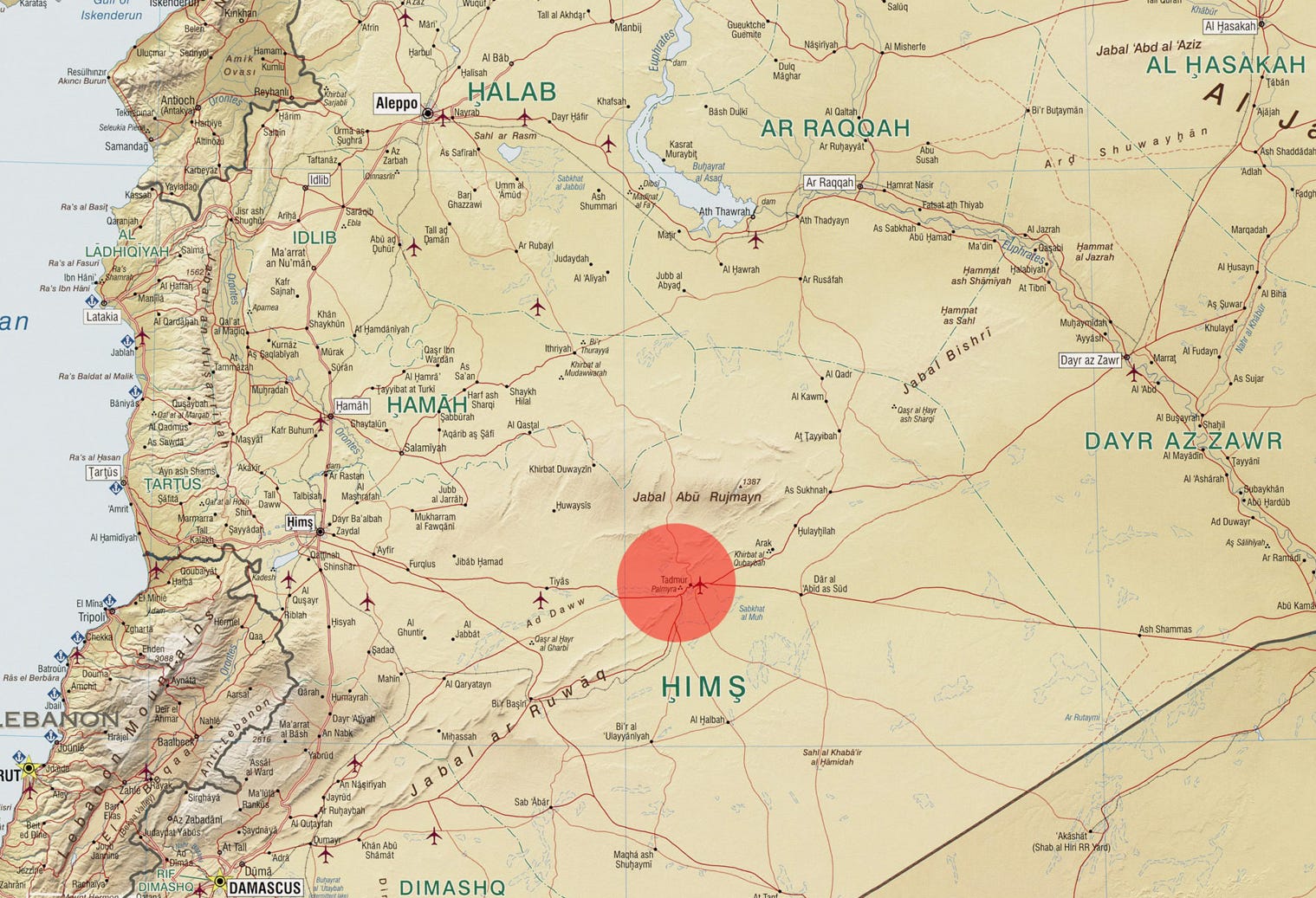
MIDDLE EAST — U.S. Central Command confirmed an ambush by an Islamic State militant on a joint patrol involving United States forces and Syrian security personnel near Palmyra in central Syria.
U.S. and Syrian Forces Neutralize ISIS Weapons Caches in Rif Dimashq Province, Syria

MIDDLE EAST — United States Central Command forces, in coordination with the Syrian Ministry of Interior, conducted operations from November 24 to 27 that identified and eliminated more than 15 sites storing Islamic State of Iraq and Syria (ISIS) materiel across Rif Dimashq province in southern Syria.
The attack resulted in the deaths of two United States Army soldiers and one civilian interpreter, with three additional United States service members sustaining injuries.
Syrian state-run media reported that two Syrian security personnel were wounded, one of whom later succumbed to injuries. The assailant was neutralized by partner forces during the incident. Helicopters evacuated the wounded to the Al-Tanf base near the Iraqi border.
Why Iran Imports Oil from Venezuela
Iran imports oil from Venezuela primarily to circumvent U.S. sanctions and support mutual economic interests. Both nations face restrictions on their oil sectors, leading to a barter system where Iran provides condensate and refined products to Venezuela in exchange for heavy crude oil.
This arrangement allows Venezuela to dilute its extra-heavy crude for export, addressing its refining shortfalls caused by sanctions and infrastructure decline. Iran’s condensate helps Venezuela revive its oil exports, while Venezuela’s crude enables Iran to blend and market its own oil more effectively.
The trade generates funds for sanctioned entities, including the Islamic Revolutionary Guard Corps-Qods Force, which uses proceeds to support groups like Hezbollah. U.S. Treasury reports indicate that networks involving Iranian tankers transport Venezuelan oil, evading price caps and sanctions.
Historical patterns show shipments dating back to 2020, with Iran assisting in refinery repairs and providing technical expertise. This alliance defies U.S. pressure, sustaining both economies amid isolation.

