
MIDDLE EAST — Iranian air defenses struck a U.S. F-35A Lightning II stealth fighter during a combat mission over Iran on March 19, forcing the aircraft to make an emergency landing at a U.S. air base in the region.
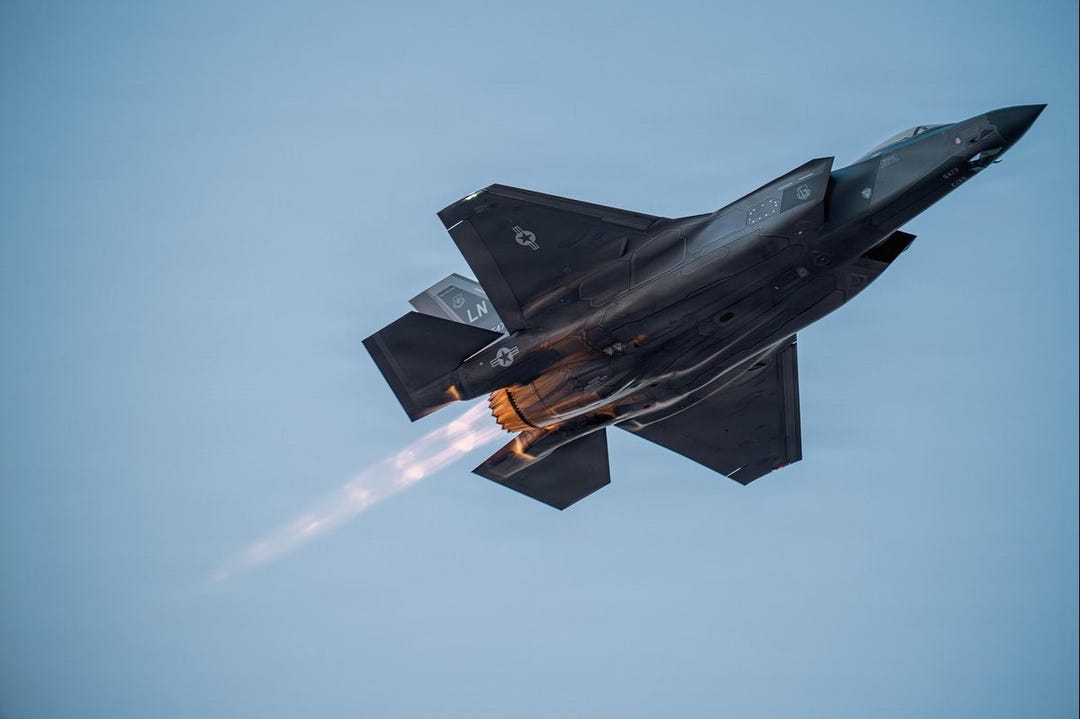


The incident marks the first confirmed damage to a fifth-generation stealth aircraft by Iranian fire since Operation Epic Fury began on February 28.
The same 48-hour window saw the Israeli Air Force open a new geographic front by striking Iranian naval infrastructure on the Caspian Sea, Israeli jets hit Iran’s South Pars gas field, and Iran retaliate against Qatar’s Ras Laffan LNG complex.
President Trump then issued an explicit threat to destroy the South Pars field entirely if Qatar’s energy infrastructure is targeted again. Six allied nations, including the UK and Japan, announced joint planning to restore safe passage through the Strait of Hormuz.
On March 19, CENTCOM commander Adm. Brad Cooper reported cumulative operational totals of more than 7,800 Iranian targets struck and 120+ naval vessels destroyed since the operation began.
Iranian ballistic missile launches are down 86% from Day 1, and drone launches are down 73%. Despite these figures, the F-35 incident, the expansion to the Caspian Sea theater, and the direct targeting of Gulf energy infrastructure by both sides represent the most significant operational developments since the operation began.
Situation at a Glance
F-35 damaged: First confirmed hit on a U.S. stealth fighter by Iranian fire; pilot safe, aircraft landed at an undisclosed base; IRGC released targeting video
U.S. Central Command (CENTCOM) totals: More than 7,800 Iranian targets struck, 120+ naval vessels destroyed including all 11 Iranian submarines since February 28; all ballistic missile and drone attacks down 90% from Day 1 (Secretary Hegseth, Pentagon briefing); A-10s hunting fast attack craft in Hormuz; AH-64 Apaches on southern flank
Caspian Sea strikes: IAF struck Bandar Anzali, destroying corvettes, missile boats, northern fleet command center, and shipyard infrastructure
South Pars attacked: Israeli aircraft struck Asaluyeh processing facilities; U.S. defense official said the strike was coordinated with the White House; Trump denied prior knowledge
Qatar LNG hit: Iranian ballistic missiles struck Ras Laffan Industrial City; 17% of Qatar’s LNG export capacity offline; 3-5 year repair estimate; Qatar expelled Iranian diplomatic staff
Trump ultimatum: Threatened to destroy the “entirety of the South Pars Gas Field” if Qatar is struck again; stated Israel “will no longer” target the field
Six-nation Hormuz statement: UK, France, Germany, Italy, Netherlands, Japan condemned Hormuz closure; joint planning for safe passage confirmed; IEA strategic reserve release welcomed
Oil market: Brent hit $119/barrel briefly, settled near $114; European gas benchmarks up 6%; only 21 tanker transits through Hormuz since Feb 28 (vs. 100+/day pre-conflict)
UK MoD: British counter-drone units destroyed 10+ drones overnight; RAF Typhoon and F-35 patrols over Eastern Mediterranean continue
U.S. casualties (cumulative): 13 KIA (per Chairman of the Joint Chiefs, March 19 briefing; includes 6 in KC-135 collision March 12), approximately 200 wounded in action
Iranian casualties (contested): Government figure of 1,444+ killed; independent monitors report 3,100-5,300 killed including 500-1,350 confirmed civilians

