
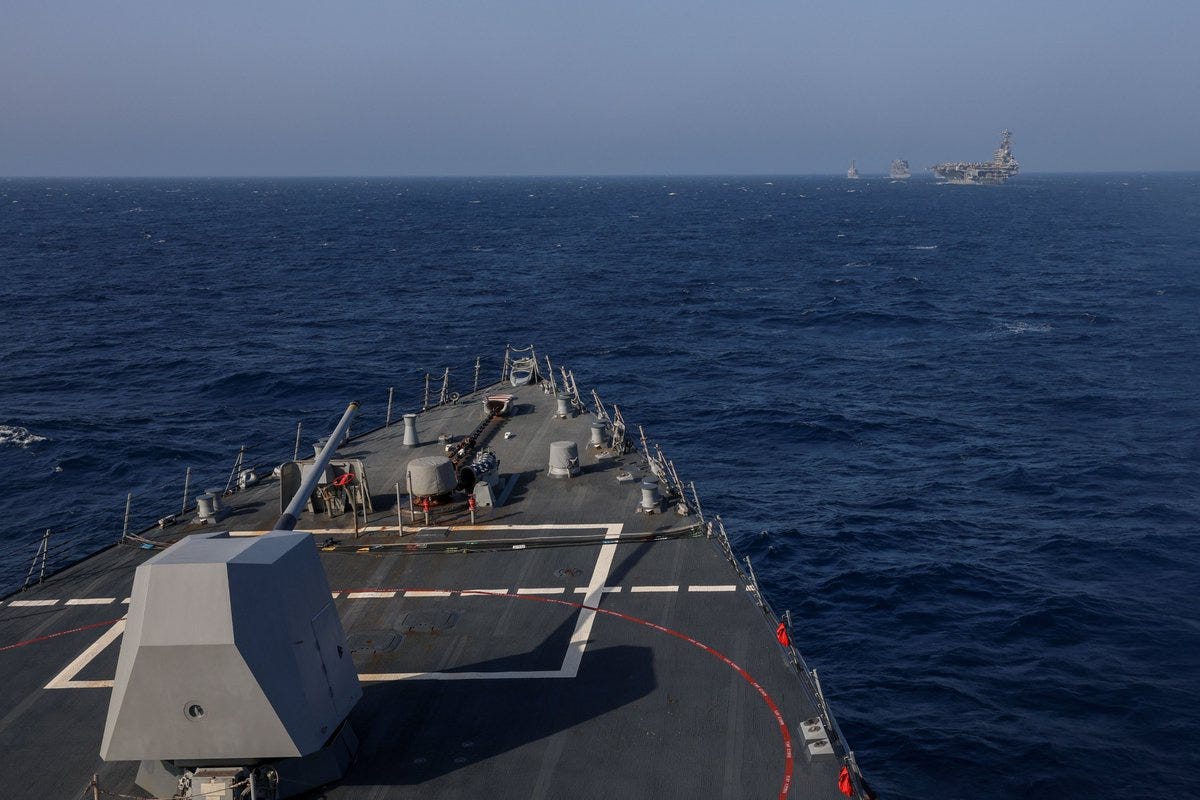
MIDDLE EAST – Tensions between the United States and Iran remain elevated across the Persian Gulf and Strait of Hormuz, where U.S. naval forces continue active blockade enforcement operations while commercial shipping traffic stays significantly reduced amid persistent threats to navigation.


Ceasefire negotiations have reached an impasse following Iran’s submission of a counterproposal through Pakistani mediators and its subsequent rejection by U.S. President Donald Trump. Neither side has provided an element‑by‑element clarification or issued a revised offer.
Iranian leadership has restated its core positions on the nuclear program and access to the Strait of Hormuz, maintaining its stance without offering concessions despite the ongoing diplomatic channel.
The Joint Maritime Information Center has set the Regional Threat Level for the Middle East Maritime Region at CRITICAL, citing several sustained risk factors: ongoing blockade enforcement, reduced commercial traffic, the presence of mines in and near the Strait of Hormuz traffic lanes, and intermittent interference with satellite navigation systems (GNSS).