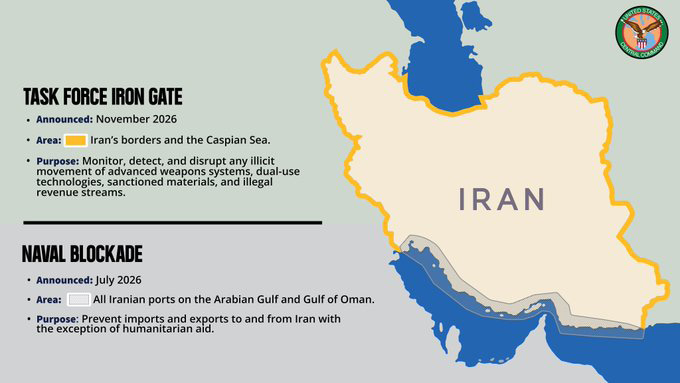
MIDDLE EAST — On November 11, U.S. Central Command said U.S. forces continue keeping the Strait of Hormuz open for commercial shipping while enforcing the naval blockade against Iran and working with interagency partners against land and Caspian routes.


On November 7 the command established Task Force Iron Gate and disabled the St. Kitts-flagged M/V Huda after it attempted to violate the blockade.
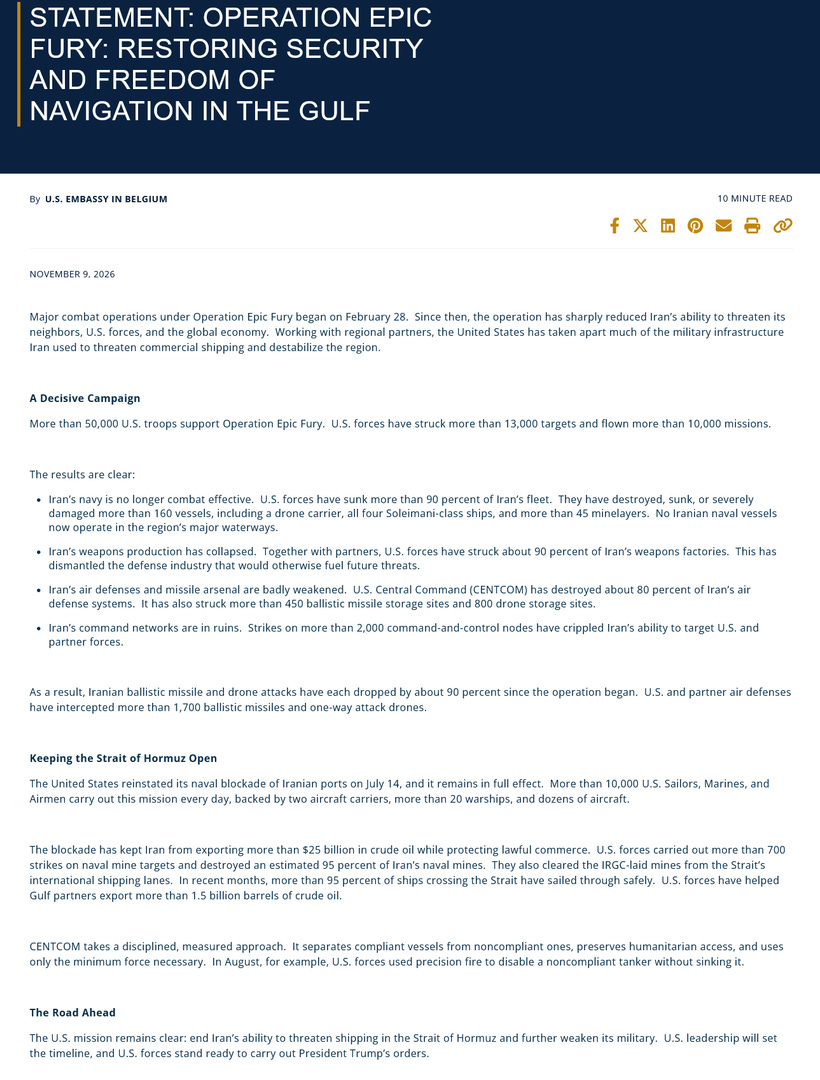
A November 9 U.S. Embassy statement summarized results of Operation Epic Fury, which began major combat operations on February 28, and the status of the blockade reinstated on July 14.
Iranian state-run media reported November 10-11 claims that additional tankers struck mines on unauthorized southern routes. Mohsen Rezaei, secretary of Iran’s Supreme National Security Council, said on November 10 that the Strait will not reopen until the United States meets seven conditions.
IRGC Spokesman Brigadier General Hossein Mohebbi, quoted by Fars News Agency, called U.S. claims of control of the Strait and of mine clearance “sheer lies” and said the Strait is completely closed.
Locations Affected
Didamar Island, also called Little Quoin or Dīdāmar, in Musandam, Oman, is the claimed site of a strike on navigation aids including radar, radio, and a lighthouse. It lies about 10 nautical miles north of the Musandam tip in the Strait of Hormuz and is controlled by Oman. The island is a rocky feature with towers that provides guidance for the southern route. Secondary imagery descriptions place it near 26.48, 56.54.
The Strait of Hormuz is the primary choke-point where U.S. Central Command said international shipping lanes have been cleared of mines and more than 95 percent of ships have transited safely in recent months, while Iranian state-run media claimed disruption on unauthorized southern routes.
The Gulf of Oman is where U.S. Central Command said its forces disabled the St. Kitts-flagged M/V Huda on November 7 after the vessel attempted to violate the blockade following a visit to an Iranian port.
