U.S. Lethal Strikes on Narcotics-Trafficking Vessels in Eastern Pacific and Soldier Casualties in Syria Ambush
An attack in Syria resulted in the deaths of two U.S. Army soldiers and a civilian interpreter during counter-Islamic State operations.
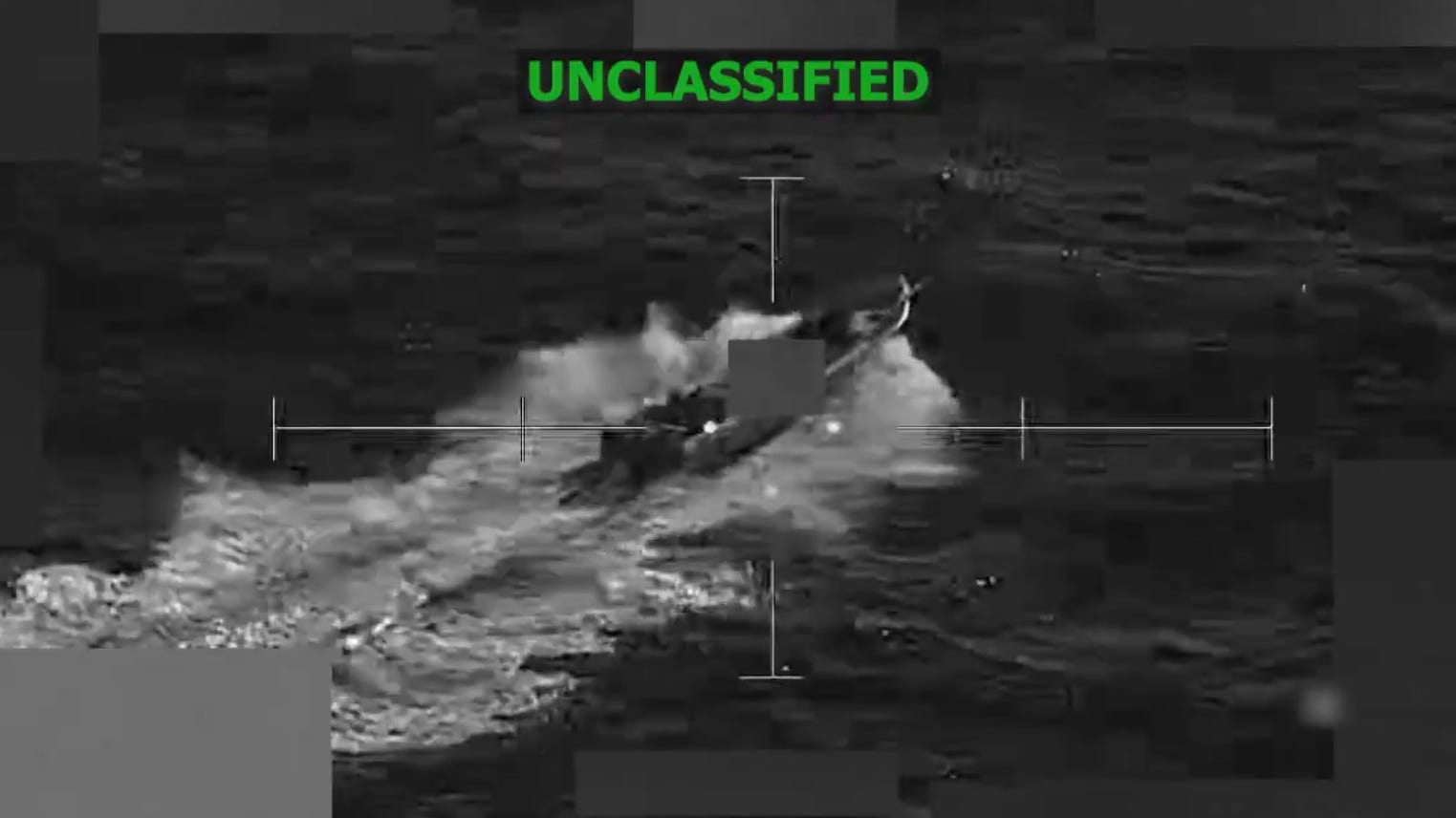
GLOBAL — The United States has conducted additional lethal strikes against vessels assessed as engaged in narcotics trafficking in the Eastern Pacific under Operation Southern Spear, while a separate attack in Syria resulted in the deaths of two U.S. Army soldiers and a civilian interpreter during counter-Islamic State operations.
U.S. military activities in December included targeted operations against vessels linked to designated terrorist organizations involved in narcotics trafficking.
These actions, executed by Joint Task Force Southern Spear under U.S. Southern Command, supported efforts to disrupt transnational criminal networks in the Western Hemisphere.
On December 15, Joint Task Force Southern Spear carried out lethal kinetic strikes on three vessels in international waters. U.S. Intelligence assessments indicated these vessels operated along known narcotics-trafficking routes in the Eastern Pacific. The strikes resulted in the deaths of eight individuals, with no injuries to U.S. personnel.
The operation on December 17 targeted one vessel, resulting in the deaths of four individuals. These operations aligned with ongoing U.S. initiatives to interdict illicit trafficking.
Incident in Syria Involving U.S. Personnel
In a separate theater, U.S. forces in Syria encountered hostile fire attributed to Islamic State elements. On December 13, near Palmyra in central Syria, a joint U.S.-Syrian patrol was attacked during a key leader engagement supporting counter-Islamic State activities.
The incident resulted in the deaths of two U.S. Army soldiers—Sgt. Edgar Brian Torres-Tovar, 25, of Des Moines, Iowa, and Sgt. William Nathaniel Howard, 29, of Marshalltown, Iowa—both members of the Iowa Army National Guard. A U.S. civilian interpreter was also killed.
Three additional U.S. personnel and two Syrian security forces members sustained wounds.
The attacker, identified as a lone gunman, was neutralized by partner forces. Preliminary assessments suggested possible Islamic State affiliation, with subsequent arrests by Syrian authorities.
Official U.S. communications expressed condolences and reaffirmed support for personnel in counter-terrorism roles.
Official Statements
“Please join me in prayer today for the souls of our brave Army Soldiers Sgt. Edgar Brian Torres Tovar and Sgt. William Nathaniel Howard, who were killed by Islamic terrorists in Syria this past weekend. Our hearts go out to their families, and we lift them up in prayer for strength and comfort during this time of grief. The United States of America will avenge these fallen Americans with overwhelming force. Their memory will live on through their fellow warriors still serving our country, and in my unwavering commitment to our warfighters around the globe.” (Secretary of War Pete Hegseth, December 16)
“On Dec. 15, at the direction of @SecWar Pete Hegseth, Joint Task Force Southern Spear conducted lethal kinetic strikes on three vessels operated by Designated Terrorist Organizations in international waters. Intelligence confirmed that the vessels were transiting along known narco-trafficking routes in the Eastern Pacific and were engaged in narco-trafficking. A total of eight male narco-terrorists were killed in these actions—three in the first vessel, two in the second and three in the third. #OpSouthernSpear” (U.S. Southern Command)
“On Dec. 17, at the direction of @SecWar Pete Hegseth, Joint Task Force Southern Spear conducted a lethal kinetic strike on a vessel operated by a Designated Terrorist Organization in international waters. Intelligence confirmed that the vessel was transiting along a known narco-trafficking route in the Eastern Pacific and was engaged in narco-trafficking operations. A total of four male narco-terrorists were killed and no U.S. military were harmed. #OpSouthernSpear” (U.S. Southern Command)
“Our entire National Guard family mourns the loss of Sgt. Edgar Brian Torres Tovar, 25, of Des Moines, Iowa, and Sgt. William Nathaniel Howard, 29, of Marshalltown, Iowa—the Iowa Army National Guard Soldiers who were ambushed and killed in Syria. Their mission was in support of ongoing counter-ISIS / counter-terrorism operations in the region. Our hearts are with their families, loved ones and the Iowa National Guard during this time of profound sorrow. We honor their courage and sacrifice, and we will never forget them or their service. We are also thinking of and praying for the families of the civilian interpreter who was killed, and the three other Guardsmen who were wounded. May God place his healing hand upon them.” (Gen. Steven Nordhaus, Chief of the National Guard Bureau)
Fact-Checking Summary
All referenced incidents and statements align with corroborated U.S. military and government sources as of December 18. Operational details from the Eastern Pacific strikes match U.S. Southern Command reports.
The Syria incident details, including personnel identifications and circumstances, are consistent across U.S. Army, National Guard Bureau, and Department of War notifications. Attribution to Islamic State elements remains preliminary.
Timeline Analysis
December 13: Attack near Palmyra, Syria, during joint patrol, resulting in U.S. and civilian casualties.
December 15: Lethal kinetic strikes on three vessels in the Eastern Pacific.
December 17: Lethal kinetic strike on one vessel in the Eastern Pacific.
Risk/Impact Matrix
Incident ID: Palmyra Ambush
Risk Level: Medium
Impact Dimensions: Human (fatalities and injuries to U.S. personnel and partners); Security (persistent insurgent activity)
Mitigation Priority: High
Source Evidence: U.S. military reports on counter-Islamic State operationsIncident ID: Eastern Pacific Strikes
Risk Level: Low
Impact Dimensions: Security (disruption of narcotics-trafficking networks)
Mitigation Priority: Moderate
Source Evidence: U.S. Southern Command operational updates
Definitions:
Incident ID: Descriptive identifier based on primary event/location from source evidence.
Risk Level: Estimated probability of recurrence based on verified patterns.
Impact Dimensions: Specific affected areas per incident.
Mitigation Priority: Required response level.


